BRAAAM: The Noise That Ate Hollywood
One foghorn blast from a 2010 trailer colonised the next decade of movie marketing. Even the man who made it thinks it got out of hand.
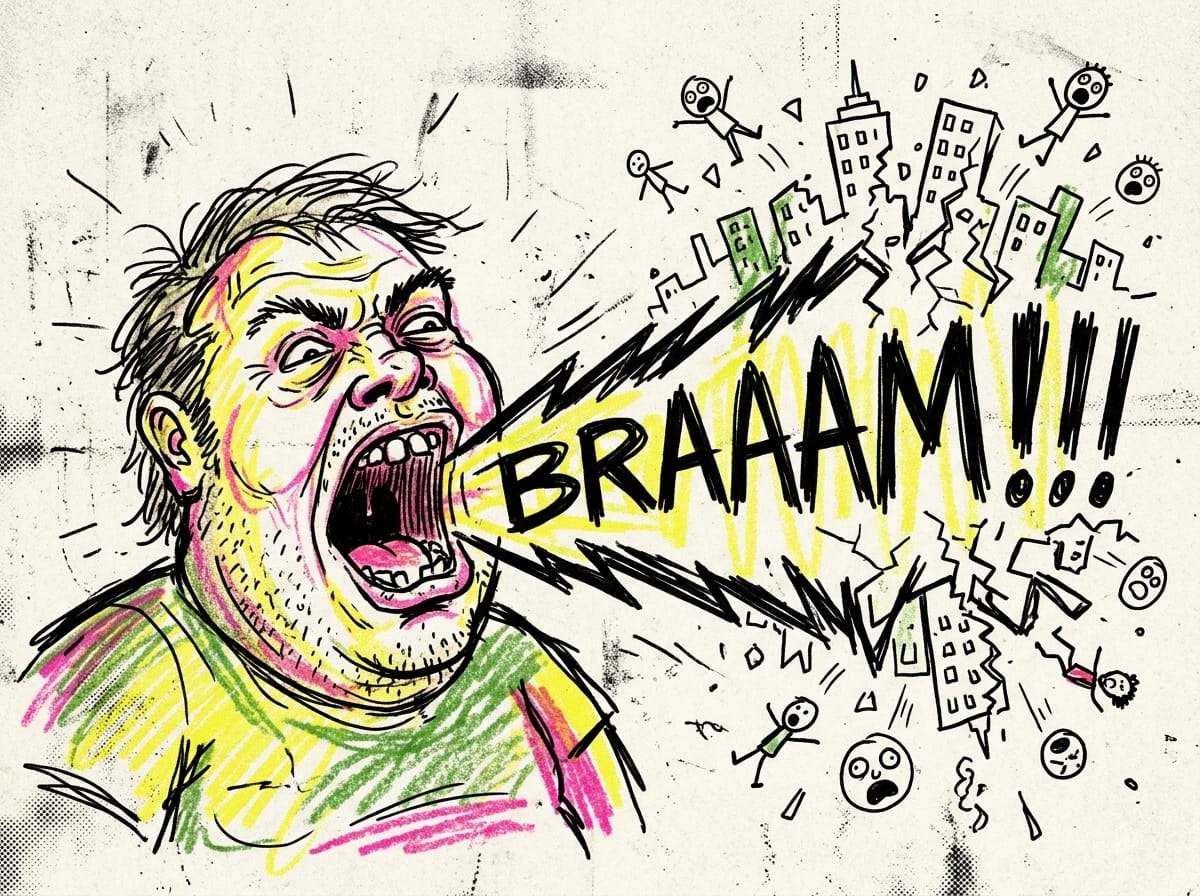
You’ve heard it a thousand times. A huge, low, brass-heavy blast — BRAAAM — dropped over a hard cut to a city skyline, a spinning top, a hero turning to camera. It’s the sound of something enormous about to happen. For most of the 2010s it was the sound of every trailer.
It has a birthplace, a disputed parentage, and a creator who’s openly sick of it.
Where it came from
The BRAAAM as we know it arrived with the first teasers for Christopher Nolan’s Inception in 2009. By the time the film landed in 2010, that colossal foghorn tone was burned into everyone’s ears — and within a couple of years it was in the trailer for nearly every action and sci-fi film going: World War Z, Star Trek Into Darkness, Prometheus, Pacific Rim, Super 8. One sound, suddenly everywhere.
The reason it spread is the reason all trailer conventions spread: trailers copy trailers. A technique works once, becomes a hit, and every editor reaches for it until it’s wallpaper.
Who actually made it
This is where it gets murky. At least three people have a claim.
Hans Zimmer, who scored Inception, is usually called the father of the sound. He’s described making it by putting a piano in a church, weighting down the sustain pedal with a book, and having brass players blow into the resonating piano strings — then adding, in his words, “a bit of electronic nonsense.”
But composer Mike Zarin, hired for that very first teaser before Zimmer was attached, says the seed was his — built from foley recordings he made riding the subway, chasing the rumble of a train. And a third composer, Zack Hemsey, refined it into the piece called “Mind Heist” that powered the second trailer.
A piano in a church, a book on the pedal, brass blown into the strings — that’s the actual recipe for the loudest sound in modern cinema.
The detail almost nobody notices
Here’s the elegant part, and it’s pure craft. In Inception, the score’s huge tones aren’t random — they’re a slowed-down version of Édith Piaf’s “Non, je ne regrette rien,” the very song the characters use inside the film to wake themselves from dreams. The sound design and the plot are the same thing, stretched. The trailer’s blast is secretly the movie’s clock.
That’s the difference between a tool and an idea. In Nolan’s hands the sound meant something. Everywhere it went afterward, it meant nothing — it was just a loud thing editors dropped in because it worked.
Even Zimmer’s had enough
The man most credited with it doesn’t mince words. Asked about the way the sound took over, Zimmer called it “horrible,” and explained the difference plainly: in Inception the tones were a story point, written into the script. Everywhere else, people were “just sort of using them as transitional pieces” — a noise to fill a gap because they didn’t know what else to do. He’s said studios would literally ask him to recreate “the Inception music” because they had no other idea, and his response was to deliberately go the opposite way: a few lonely notes instead of the wall of brass.
That’s the life cycle of a trailer technique in miniature: a genuine idea, copied until it’s a cliché, abandoned by the person who started it. Which is exactly why trailers almost never use the real song either — and why the whole structure of a trailer runs on borrowed, recycled moves.
This is Trailer Trash. We make trailers for films that don’t exist — and write about the ones that do. Follow along on [YouTube], [TikTok], [Instagram], and [X].