The Most Subversive Premise in Cinema Is Rarer Than You Think
A twist ending isn't subversion. A parody isn't subversion. Real subversion flips the engine of a genre — and almost nobody actually does it.
“Subversive” is one of the most over-used words in film writing, and almost always misused. A twist ending gets called subversive. A parody gets called subversive. A grim, R-rated take on a kids’ genre gets called subversive. None of those things actually are.
Real subversion is rarer, harder, and far more interesting. It’s worth being precise about what it is — because once you can see it, you can see how little of it there actually is.
What subversion is not
A twist ending is not subversion. The Sixth Sense has a brilliant twist, but it’s still a ghost story playing the ghost-story game by the rules — it just hides one card until the end. The genre’s engine runs exactly as expected; you’re surprised, but nothing about the form has been inverted.
A parody is not subversion. Airplane! mocks the disaster movie mercilessly, but it depends on the disaster movie existing and working as it always has. It comments on the genre from outside. It doesn’t flip the genre’s core.
A darker version is not subversion. Making the superhero gritty, or the fairy tale bloody, is a change of tone, not of premise. The machine still does what it always did, just in a different colour.
A twist hides a card. A parody points and laughs. Subversion rebuilds the engine. Only the last one changes what the genre can mean.
What subversion actually is
True subversion takes the core premise of a concept or genre and inverts it — not the ending, not the tone, but the central engine — in a way that opens up genuinely new thematic territory.
The test is simple: does the inversion let the story say something the original form structurally could not?
Take survival horror. Its engine is the will to survive — the desperate human drive to get out alive. Now invert that single thing: a zombie apocalypse where a petrol-station attendant just keeps working the night shift, because nobody ever told him he could leave. The genre’s whole machine flips. The horror is no longer the zombies; it’s compliance — the terrifying human capacity to follow the rules long after the world that made them has ended. That’s territory survival horror literally cannot reach while its engine is “stay alive.” We explored a whole batch of these inversions here.
Why it’s so rare
Three reasons, all of them structural rather than a failure of imagination.
First, it’s genuinely hard. A twist you can bolt onto a finished script. A true inversion has to be baked into the premise from the first sentence, because it changes everything downstream — the stakes, the arc, what the ending even means.
Second, it’s a commercial risk. Genres are reliable because audiences know the machine and want it to run. Inverting the engine means selling people something that looks like a familiar thing but behaves like an unfamiliar one — which is a much harder pitch than “the usual, but with a surprise.”
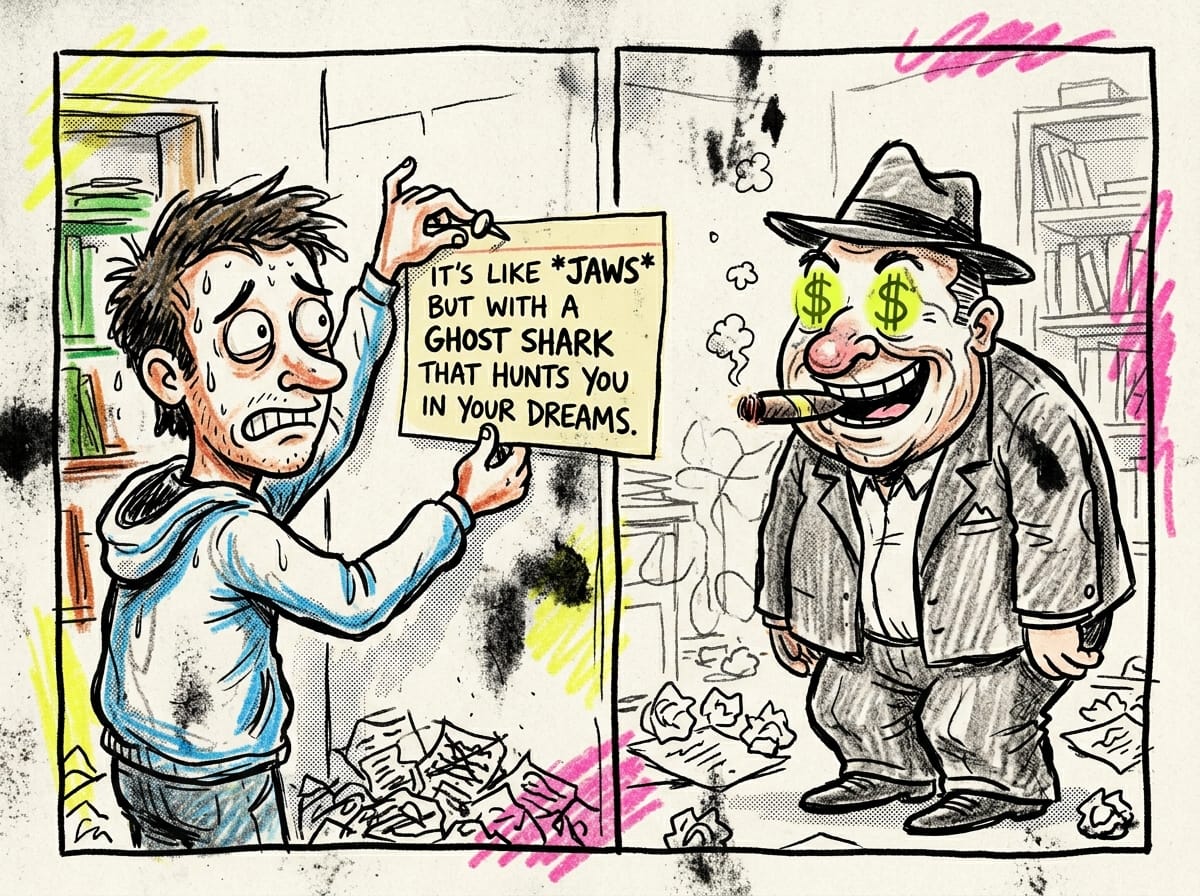
Third — and this is the deep one — most “high-concept” ideas are additive, not inversive. “It’s X but with Y” adds an element. Subversion removes or flips the load-bearing one. The instinct in development is almost always to add (a bigger threat, a new power, a fresh setting), because adding feels safe. Flipping the core feels like breaking the thing. So people don’t.
The reward for getting it right
When subversion does land, it doesn’t just surprise you — it makes the original form look different forever after. A haunted house that desperately wants a family to stay but can’t stop scaring them away turns the entire genre into a story about self-sabotage, and you can’t unsee it the next time you watch a normal one.
That’s the prize, and it’s why the word is worth protecting from the twist-merchants. A twist makes you gasp once. A true subversion changes what a whole genre is capable of meaning — which, not coincidentally, is exactly the kind of premise a trailer is built to make irresistible and exactly the kind we keep chasing.
This is Trailer Trash. We make trailers for films that don’t exist — and write about the ones that do. Follow along on [YouTube], [TikTok], [Instagram], and [X].